
Workplace Presence: The Complete Guide for 2026


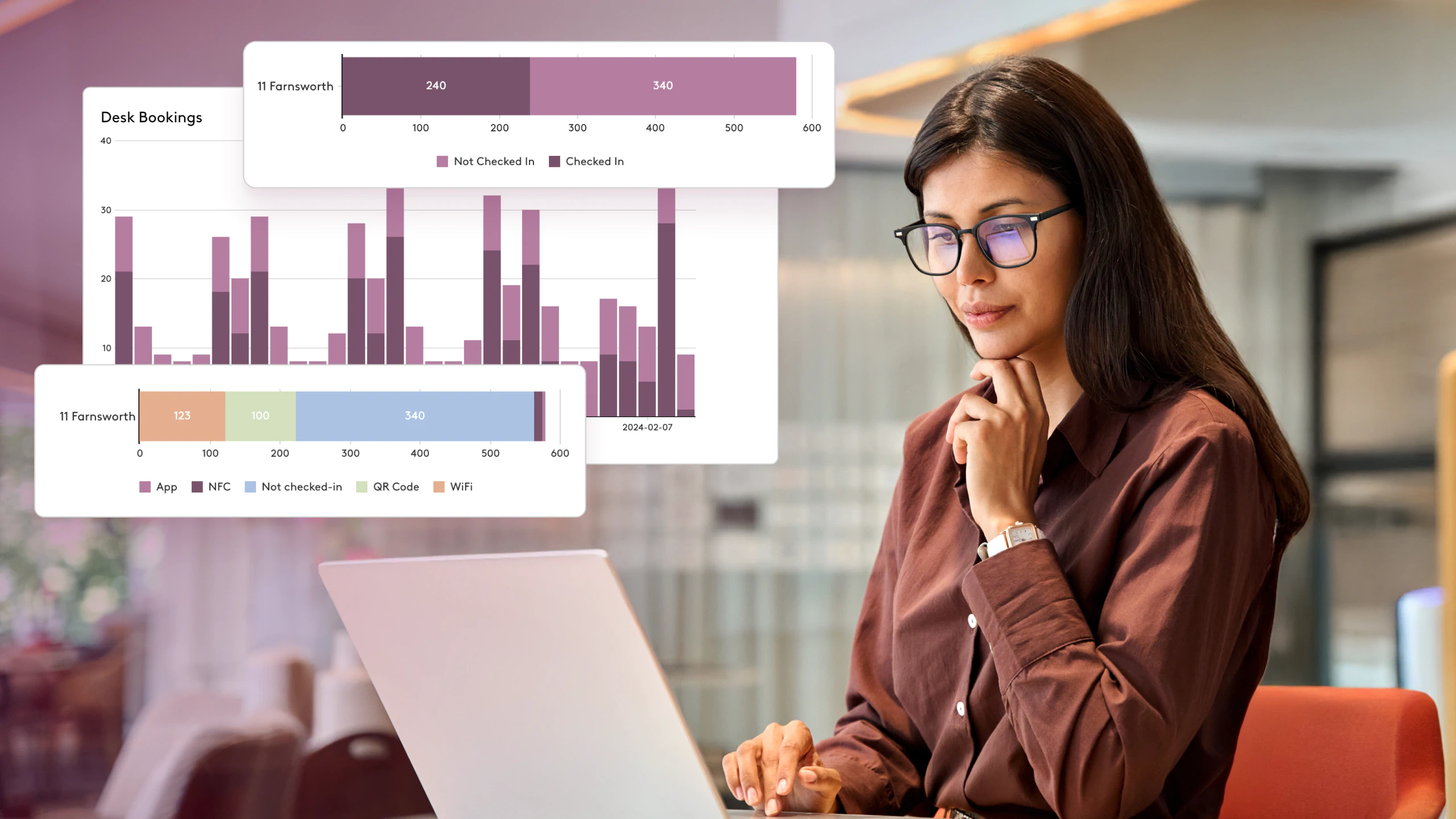
Workplace presence is the ability to accurately understand who is using the office, when they're there, and how they use workplace spaces. This guide lays out why office presence data matters for hybrid work, and how combining multiple signals creates accurate workplace analytics.
Walk through almost any office on a Tuesday or Wednesday and you'll hear the same questions.
"Why is every conference room booked?"
"Where is everyone?"
"Do we really need this much office space?"
They sound like three different problems, but they're actually symptoms of the same challenge: organizations don't have a clear picture of how their offices are being used.
It's an understandable position to be in. Workplace leaders naturally rely on what they can see or the data they already have. But when real estate is often an organization's second-largest expense, gut instinct and disconnected reports aren't enough to support multimillion-dollar workplace decisions.
That's where workplace presence comes in.
Workplace presence is the ability to accurately understand who is using the office, when they're there, and how they use workplace spaces. That visibility has become increasingly important ever since the rise of hybrid work fundamentally changed how organizations manage their offices.
Before COVID-19, office attendance was relatively predictable. Most employees worked onsite every day, making decisions about office space, staffing, and workplace operations relatively straightforward. Today, employees split their time between the office and remote work. Attendance fluctuates by team, day, and even hour, making it much harder for companies to know how to truly optimize their space.
What is Workplace Presence?
Workplace presence is the ability to understand in real-time who is physically in the office, when they're present, and how they're using workplace spaces.
While that definition sounds straightforward, achieving it is surprisingly difficult in a hybrid workplace.
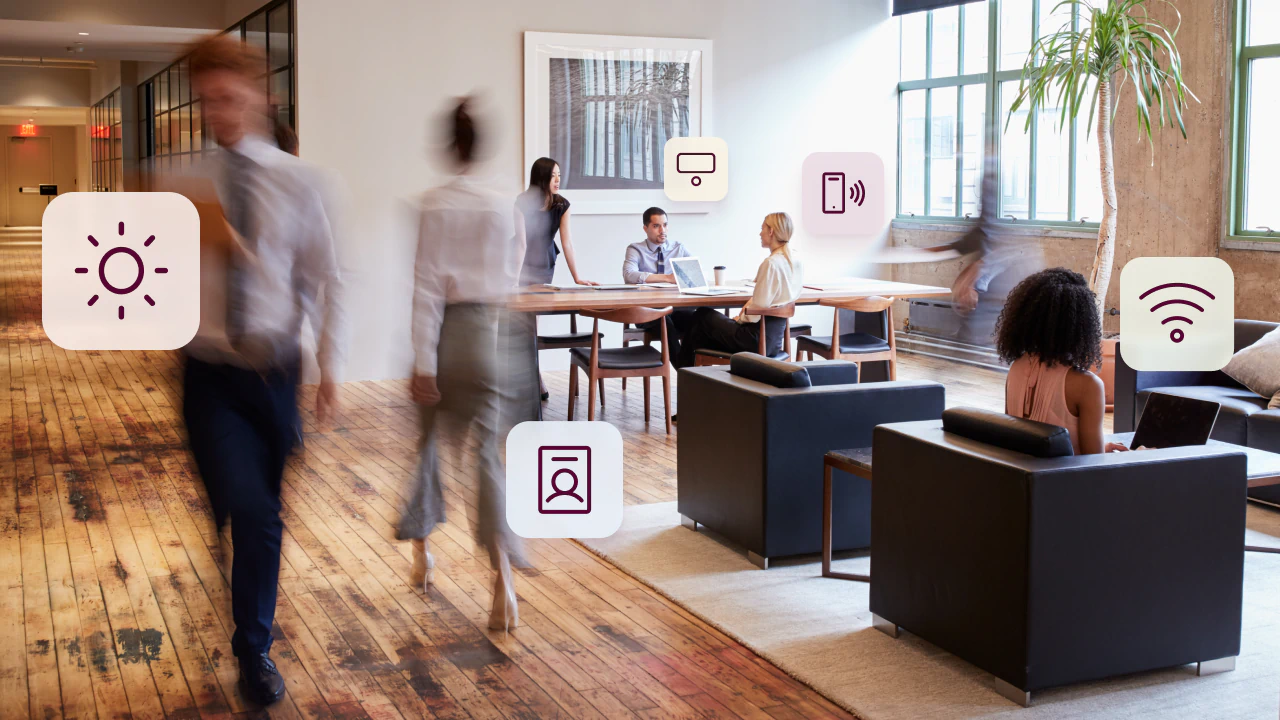
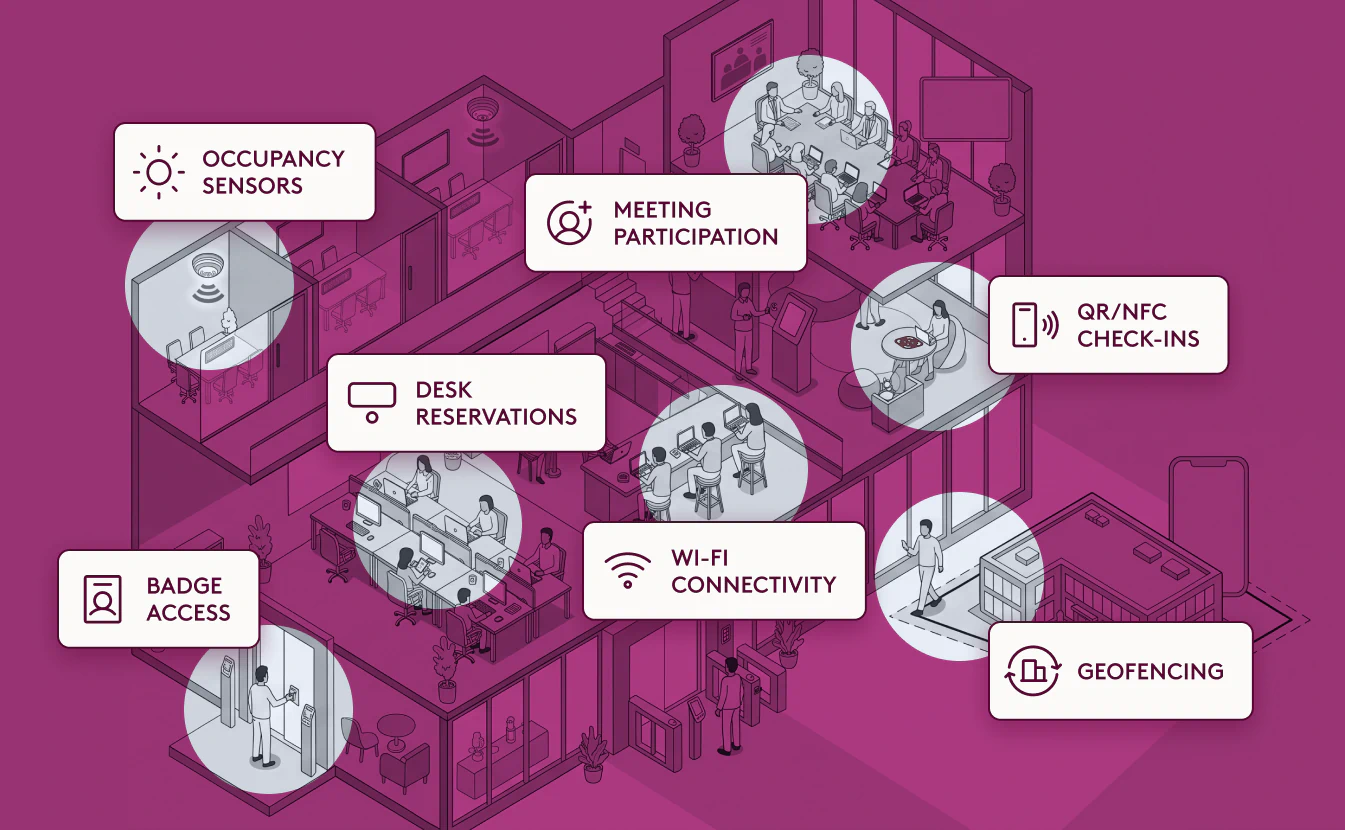
Unlike traditional attendance tracking, workplace presence combines multiple signals, including:
- Badge access: Records when an employee enters or exits a building or secured area using their ID badge.
- Desk reservations: Tracks which desks employees have booked in advance through a workspace scheduling system.
- Wi-Fi connectivity: Detects presence based on an employee's device connecting to the office wireless network.
- Room occupancy sensors: Uses in-room hardware (typically motion sensors) to detect whether a meeting room or space is currently in use.
- QR or NFC check-ins: Logs presence when an employee scans a code or taps a device at a designated location.
- Meeting participation: Infers on-site presence from calendar or conferencing data, such as joining an in-person meeting or badge-verified attendance.
- Geofencing (with employee opt-in): Uses a device's location data to confirm an employee is within a defined office boundary, only when the employee has consented to location sharing.
Each signal contributes part of the picture. Together, they create a much more accurate view of office activity.
Why isn’t One Presence Signal Enough?
While each individual signal offers value to teams, none of them alone paint the full picture of what’s happening in your office. Only looking at one signal means that you’re ignoring other layers of your organization and making important real estate decisions with limited information.
Ten years ago, this wasn’t so much an issue because many organizations simply needed to know how many employees were assigned to an office. Most teams had everyone coming into the office 5 days a week, making planning much more predictable.
But today, workplace teams need to answer much more complex questions:
- Which teams are onsite today?
- Do we have enough meeting rooms?
- Are assigned desks sitting empty? Which departments consistently follow hybrid policies?
- Are employees arriving but forgetting to check into their reservations?
- Which buildings are busiest on Tuesdays compared to Thursdays?
- Can we condense our office space?
Teams can’t answer these questions reliably just by looking at a single signal. This is because workplace technology like badge access or desk reservations were each built with one function in mind.
For example, badge data can confirm an employee arrived at the office, but it can't tell you where they worked, how long they stayed, or whether they used a meeting room. Likewise, a desk reservation reflects intent, not whether someone actually showed up.
These data gaps are why modern workplace presence combines information from multiple sources; it creates one trusted view of what's happening across an office.
When badge data, reservations, occupancy sensors, Wi-Fi, and other signals all work together, workplace leaders get a much deeper and accurate understanding of how employees actually use the office.
Learn more: Read our guide on How to Track Workplace Presence to explore the Workplace Presence Maturity Model, compare the strengths and limitations of each presence signal, and learn how leading organizations build a complete view of all their office activities.
Why is Workplace Presence Important?
Accurate workplace presence helps organizations optimize real estate, improve workplace operations, enhance employee experiences, and make more confident business decisions.
When leaders trust their workplace data, they can make real estate decisions with confidence instead of relying on periodic walkthroughs or anecdotal feedback. They understand how employees actually use offices, neighborhoods, meeting rooms, and collaboration spaces, making it easier to redesign workplaces, consolidate underused space, and plan for future growth.

That's exactly what happened at athenahealth. After integrating badge access with Robin to automatically confirm employee presence, the company gained a more accurate picture of how its team was using their offices.
By analyzing its workplace presence data, athenahealth had the evidence to justify converting underused office space into flexible training and collaboration areas.
This visibility also improves day-to-day operations for teams taking advantage of their workplace presence data. Facilities and workplace teams can align cleaning schedules, catering, reception staffing, and other workplace services with actual office demand rather than historical averages or assumptions. Instead of reacting to attendance patterns, they can plan for them.
Employees benefit too. Automatic check-ins, accurate coworker visibility, and better-managed workspaces create a more seamless office experience, reducing administrative friction so people can focus on why they came into the office in the first place: collaborating with their teams.
Most importantly, workplace presence creates confidence. By combining multiple workplace signals into a trusted view of office activity, organizations can move faster and make better-informed decisions across every part of the business.
Want to dive deeper? Learn more about the benefits of workplace presence data in our blog, Five Ways Workplace Presence Improves Business Decisions.
Why Does Workplace Presence Matter in 2026?
Workplace presence matters in 2026 because it answers questions leaders can't ignore:
- Do we have the right amount of office space?
- Are employees collaborating the way we intended?
- Where should we invest next?
- What's creating friction in the workplace?
Hybrid work made these questions harder to answer. Workplace presence solves this by pulling together signals like badge access, Wi-Fi, and desk bookings into one clear picture. Instead of guessing, leaders get real data to make smarter decisions about office space, hybrid policies, and employee experience.
For the last several years, organizations accepted incomplete information because there wasn't a better alternative. But the organizations making the most of their real estate now centralize these signals onto a single platform to get a clearer picture of their data.
When done right, team members feel the impact across the entire organization.
Employees arrive at an office that feels predictable. They know where teammates are sitting, spend less time dealing with check-ins and logistics, and more time collaborating with coworkers. Facilities and IT teams can plan proactively and align workplace services with actual demand. Meanwhile executives get the data they need to confidently make high-impact decisions about real estate, hybrid work policies, and workplace investments backed by data they trust.
As a result, the entire organization performs better.
If you'd like to learn more about workplace presence, we recommend the following guides:
- How to Track Workplace Presence: Use the workplace presence maturity model to see where your team stacks up
- Five Ways Workplace Presence Improves Business Decisions: See how better workplace data leads to better real estate, operational, and employee experience outcomes.
Robin is a workplace operations solution that brings all these workplace presence signals together onto a single platform. By connecting employees, workspaces, and workplace data, Robin unlocks a trusted view of office activity to power more accurate workplace analytics and smarter decisions about real estate, hybrid work, employee experience, and office operations.
See Workplace Presence in Action
Understanding workplace presence is one thing. Seeing how multiple signals come together to create a trusted view of your workplace is another.
Watch our on-demand webinar, From Scattered Signals to One Clear View of Presence, to learn how organizations combine badge access, Wi-Fi, sensors, and other workplace data to improve analytics, automate workflows, and make more confident workplace decisions.
Frequently Asked Questions
What is workplace presence?
Workplace presence is the ability to understand who is physically in the office, when they are present, and how they use workplace spaces, by combining multiple attendance and occupancy signals into a unified operational view.
Why isn't badge data enough to track attendance?
According to CBRE, 90% of companies rely on badge swipe as their primary (and often only) presence signal. Badge systems provide one of the strongest indicators that an employee entered a building, but they don't show how employees use desks, meeting rooms, or collaboration spaces after arriving. Combining badge data with other workplace signals creates a much more complete picture.
What’s the difference between office attendance and presence?
Office attendance measures whether an employee came into the office. It's a simple yes-or-no signal that often comes from badge swipes, manual check-ins, or desk reservations.
Workplace presence goes much further by combining multiple signals like badge access and desk reservations or Wi-Fi activity to understand who is in the office, how long they’re there, where they're working, and how they're using workplace spaces.
What’s the difference between workplace presence and occupancy?
Occupancy measures whether a workspace is being used. For example, an occupancy sensor can detect that a meeting room or desk is occupied at a specific point in time. Workplace presence combines occupancy with other workplace signals to explain who is using the space, when they're using it, and how it fits into broader workplace activity.
A conference room may appear occupied, but workplace presence can reveal whether it was the scheduled meeting, an impromptu collaboration, or someone using the room as a quiet workspace.
What’s the difference between workplace presence and utilization?
Workplace utilization measures how efficiently office space is used over time. Common utilization metrics include desk occupancy rates, meeting room usage, and floor capacity. Workplace presence provides the data that makes those utilization metrics more accurate.
Why is workplace presence important for hybrid teams?
Hybrid work creates changing attendance patterns that make workplace planning much more complex. Reliable workplace presence helps organizations optimize their office space, improve employee experiences, align workplace operations with actual demand, and make better real estate decisions based on trusted data.
What workplace technologies generate presence signals?
Common workplace presence signals include badge access systems, desk booking platforms, Wi-Fi networks, occupancy sensors, QR codes, NFC tags, meeting room hardware, geofencing, and custom operational systems connected through APIs.
How does Robin improve workplace presence?
Robin combines multiple workplace presence signals into a single platform that powers workplace analytics, desk and room check-ins, automations, workplace planning, and operational reporting. Instead of relying on one source of data, Robin continuously builds a more complete understanding of office activity.