

What is Envoy? A Complete Overview of Features, Pros, Cons, and Alternatives



Envoy is workplace technology best known for security- and compliance-focused visitor management; front-desk check-in, badge printing, and NDA workflows. Over time it added desk booking, room booking, and analytics on top of that foundation. While it remains a capable visitor and lobby-security tool, many teams hit limitations when they try to use it to run day-to-day workplace operations across a hybrid office.
Choosing the right workplace platform isn't just about checking visitors in at the front desk. It's about how your office actually runs day to day. From employee experience to space utilization reporting, the tools you choose directly shape how effective your workplace operations become.
This guide breaks down what Envoy does well, where teams run into friction, and how it compares to a purpose-built workplace platform like Robin.
What Is Envoy?
Envoy is a workplace technology company that started with security- and compliance-focused visitor management; signing guests in, printing badges, running NDA workflows, and managing the front desk. It has since expanded to add desk booking, room scheduling, and workplace analytics on top of that foundation.
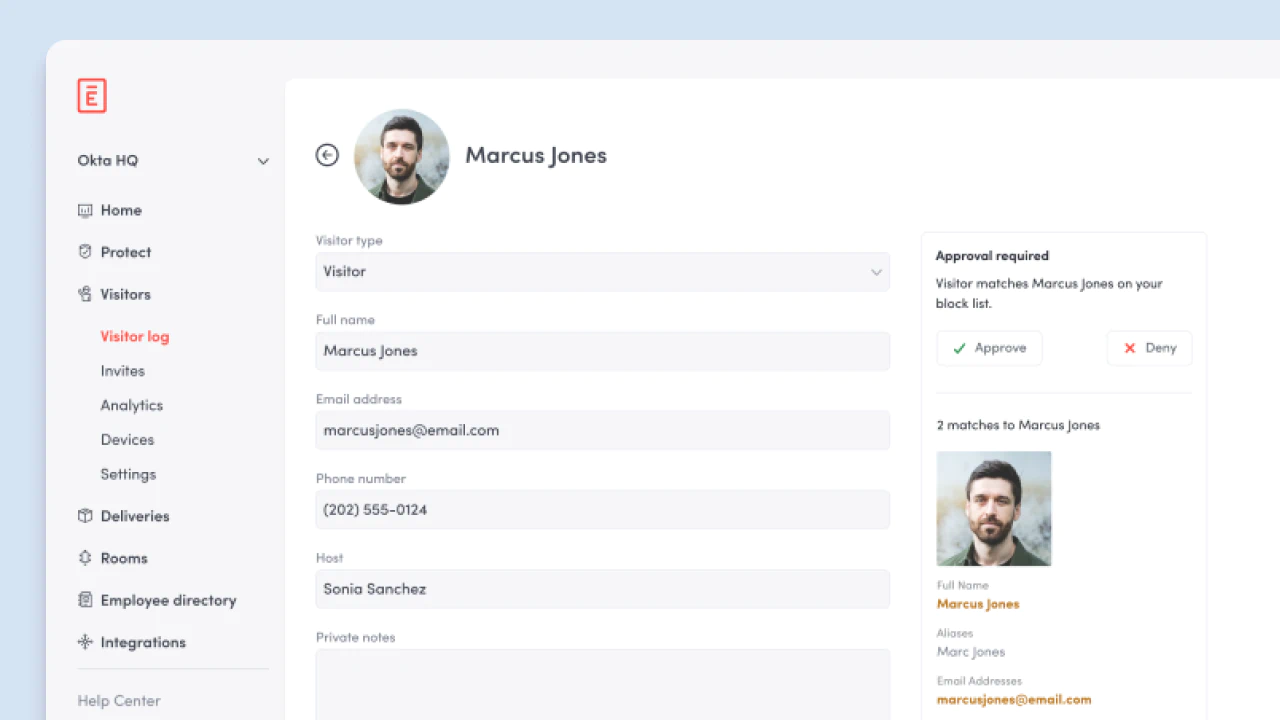
At its core, Envoy focuses on:
- Security- and compliance-focused visitor management and front-desk check-in
- Desk and room booking
- Deliveries and package management
- Basic workplace analytics and occupancy reporting
Envoy works well for organizations whose primary need is managing visitor experience, security and compliance. However, as workplace needs shift toward hybrid work, many teams expect deeper analytics, stronger adoption, and a more complete operational platform than a visitor-first product typically provides.
Envoy Pros and Cons
Envoy Pros
- Security- and compliance-focused visitor management: Mature check-in, badge printing, NDA workflows, and arrival notifications.
- Front-desk experience: Clean lobby and reception workflows that are quick to set up.
- Deliveries handling: Useful package and mailroom tracking features.
- Entrenched brand: Widely recognized, with an established customer base in the security- and compliance-focused visitor management space.
Envoy Cons
- Workplace features added on top: Desk booking, room booking, and analytics were built on a visitor-first foundation, not as core workplace operations.
- Adoption stalls on the workplace side: Desk and parking usage often stays light when booking lives outside the tools employees already use.
- Reporting requires rework: Exports can arrive split across tabs or missing context, turning floor reshuffles into spreadsheet projects.
- Renewal price increases: Long-term customers frequently report significant renewal hikes and tier creep.
- Per-location pricing: Costs can be hard to justify when only one feature is driving real value.
- Slow-moving roadmap: Logged bugs and feature requests can sit open for months, with limited visibility into what's shipping next.
Is Envoy a Workplace Operations Platform?
Envoy began as a point solution for security-based visitor management, and for years that's how it was positioned. It only reframed itself as a broader workplace platform in 2025. The desk booking, room booking, and analytics it added came through slow, incremental investments layered on top of a front-desk product, while its core messaging, roadmap, and engineering focus have stayed anchored in visitor management. As a result, the workplace pieces look familiar on the surface, but they don't always run the way a true workplace platform needs to when managing hybrid operations day to day.
Depending on how much of the office a team is trying to run, this can show up as:
- Workplace booking workflows that employees route around
- Reporting that needs manual cleanup before it's usable
- Desk and parking adoption that stays light over time
- Workplace feature requests that sit open while visitor features advance
- Pricing tied to locations rather than actual workplace usage
While visitor management is table stakes, running a hybrid workplace requires desks, rooms, parking, and analytics working together as a system. Many organizations evaluating workplace software prioritize platforms where those capabilities are native rather than bolted onto a visitor management point solution, especially when standardizing operations across multiple offices.
Questions to ask when evaluating:
- Is the core of the platform the front desk, or day-to-day workplace operations?
- Will employees book desks and rooms in tools they already use, or in a separate app?
- How much rework is required before reporting answers basic workplace questions?
Does Envoy Support Hybrid Workplace Optimization?
Envoy includes desk and room booking that can support hybrid environments. However, its product roots are in visitor management, so hybrid workplace and employee experience features come primarily from capabilities added on top of a check-in foundation rather than a purpose-built hybrid platform.
Workplace leaders focused on improving office attendance, collaboration, employee engagement, and space utilization often require deeper behavioral insights than a visitor-first platform natively provides.
Organizations evaluating workplace platforms today commonly want answers to questions like:
- Which teams collaborate most effectively in person?
- How often are employees using assigned desks and neighborhoods?
- Which spaces improve attendance and engagement?
- Which workplace policies actually drive office utilization?
Robin's workplace analytics were designed specifically around hybrid workplace operations and employee experience, combining utilization trends, collaboration patterns, and office activity across buildings, floors, teams, and resources in a single platform.
Questions to ask when evaluating:
- Is your workplace priority visitor check-in, or understanding how employees interact with your office?
- Are hybrid workplace insights natively available, or is additional configuration required?
- How easily can workplace leaders measure engagement and space utilization without IT involvement?
How Does Envoy Handle Workplace Analytics and Reporting?
Envoy offers analytics and occupancy reporting drawn from its connected workplace and visitor features. The key distinction is the effort it takes to turn that data into answers.
Because the workplace layer was added on top of a visitor product, exports often arrive split across tabs or missing context, and a simple question — like who sits where, or how utilization changed after a policy update — can turn into a spreadsheet exercise. For workplace leaders who want immediate, shareable visibility without stitching CSVs together, that gap is meaningful.
Questions to ask when evaluating:
- Do reports come out ready to share, or do they require cleanup first?
- How much manual aggregation is required to generate cross-location insights?
- Have you assessed the full cost of managing visitor and workplace data separately?
Robin vs. Envoy
When comparing Robin and Envoy, the biggest difference is platform philosophy. Robin was purpose-built as a unified workplace operations platform for hybrid work, with visitor management included. Envoy was built around the front desk, with workplace features added on top. That distinction impacts adoption, workplace analytics, employee experience, and long-term cost.
Why Organizations Choose Robin Over Envoy
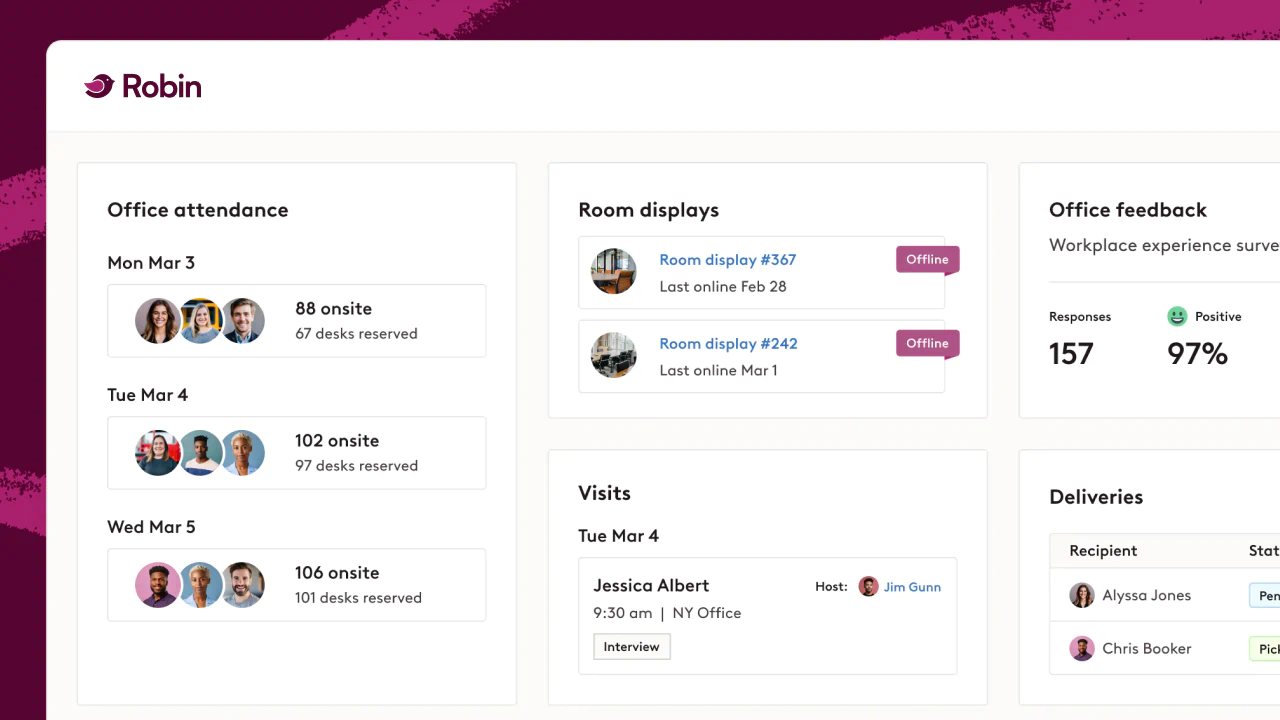
Most teams that move from Envoy to Robin aren't leaving visitor management behind — they're consolidating. Instead of running a check-in product alongside separate tools for desks, rooms, and reporting, they want one platform where those pieces work together as a system. The common thread is depth: visitor management is table stakes, but running a hybrid office requires desks, rooms, parking, and analytics that were built for day-to-day operations, not added on top of a front-desk app.
Organizations consistently point to a few reasons Robin fits that need better:
- One platform instead of several: Visitors, desks, rooms, parking, and analytics live in a single system — not a visitor app stitched to point solutions.
- Adoption that actually sticks: Booking happens inside Outlook, Teams, Google Calendar, and Slack, so employees don't route around a separate app.
- Reporting that answers the question: Attendance and utilization come out of the dashboard ready to share, without rebuilding exports in spreadsheets.
- A roadmap that moves: Monthly releases, a public roadmap, and a CSM who can say what's shipping and when.
- Pricing that tracks usage: Cost scales with active users and real usage rather than your real estate footprint, with no surprise renewal spikes.
You Don't Have to Trade Down on Visitor Management
Consolidating onto Robin doesn't mean settling for a lighter front desk. Robin's visitor management is built for enterprise security and compliance; the same ground Envoy competes on. Guests self-register at arrival displays, sign NDAs and other documents during check-in, and trigger automatic arrival notifications to hosts via email, Slack, or Teams. Teams can print physical badges, build custom registration forms, bulk-invite visitors by CSV for events, manage deliveries with recipient notifications, and export full visitor records for security and compliance reporting.
It's also backed by the certifications enterprise security teams ask for, including SOC 2, ISO/IEC 27001, CSA STAR, and GDPR compliance. The difference isn't whether Robin can run your lobby; it's that the lobby runs on the same platform as your desks, rooms, parking, and analytics, instead of as a separate product.
When Should You Consider Switching to Robin?
Teams typically consider switching from Envoy when their workplace needs evolve beyond visitor management into day-to-day operational efficiency. If you're getting real value from the lobby but the workplace side never took off, it may be a sign you've outgrown a visitor-first tool. Common signals include:
- You rely on manual reporting: If answering basic questions about attendance or utilization means stitching CSVs together, you're missing the kind of workplace analytics that support faster decisions.
- Your team is doing too much manual admin work: Floor reshuffles that turn into spreadsheet projects slow down workplace operations and make it harder to adapt your office space planning strategy.
- Employees aren't consistently using the platform: Low adoption often comes from booking that lives outside the tools employees already use, which is why many teams invest in better desk booking software.
- Your renewals keep climbing: Per-location pricing and renewal increases can push total cost up without adding workplace value.
- You need better hybrid work support: Robin helps organizations support evolving hybrid work patterns and workplace policies.
How Robin Solves Common Envoy Challenges:
- Booking where work already happens: Employees reserve desks and rooms directly in Outlook, Google Calendar, Teams, and Slack through desk booking built for quick adoption.
- Built-in analytics: Leaders can understand attendance and utilization through workplace analytics without rebuilding reports in spreadsheets.
- Automated workflows: Robin's workplace experience focus reduces manual work for admins and creates a smoother employee experience.
- Visitor management you don't give up: Robin includes enterprise-ready visitor management. NDA and document workflows, badge printing, arrival displays, custom forms, and delivery handling built into the same platform as rooms and desks, and backed by SOC 2, ISO/IEC 27001, CSA STAR, and GDPR compliance.
- Global scale: Unified reporting and operational workflows support space management across multiple offices and regions from a single system.
Key Takeaways
- Envoy is best suited for organizations whose primary need is visitor management and front-desk check-in
- Its workplace features sit on top of a visitor management foundation, which can lead to light adoption and reporting that needs rework
- Hybrid teams often need stronger native analytics, automation, and employee experience tools than Envoy provides out of the box
- Robin focuses on simplifying day-to-day hybrid workplace operations through a single, purpose-built platform — with security-based visitor management included
FAQs About Envoy and Workplace Operations Software
Final Thoughts
Envoy is a practical choice for organizations focused on visitor management and a polished front-desk experience. However, companies evaluating workplace management software increasingly prioritize native adoption, centralized analytics, simplified operations, and flexible hybrid work support, without paying for and managing the workplace and visitor sides as separate products.
Robin was purpose-built around those priorities. Robin helps organizations centralize workplace operations, improve workplace experiences, optimize hybrid work strategies, and make faster workplace decisions through one connected platform, with comprehensive visitor management included.
Want to see how Robin works in your office?
Schedule a demo to explore how your team can reduce manual work and get better visibility into workplace usage.
Already using a workplace tool?
You don't have to start over to get more value. See how switching to Robin works, and how teams make the move without disruption.